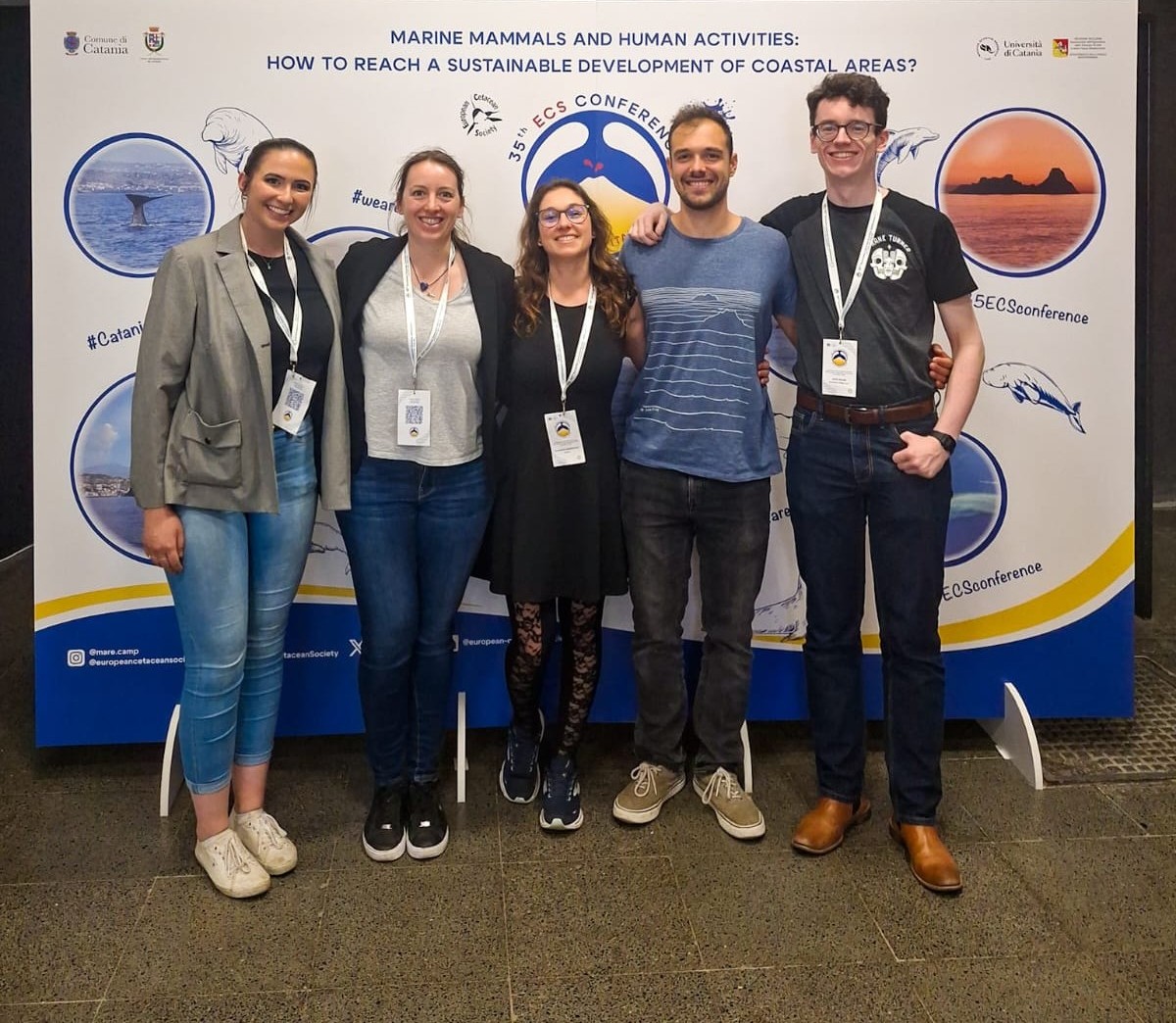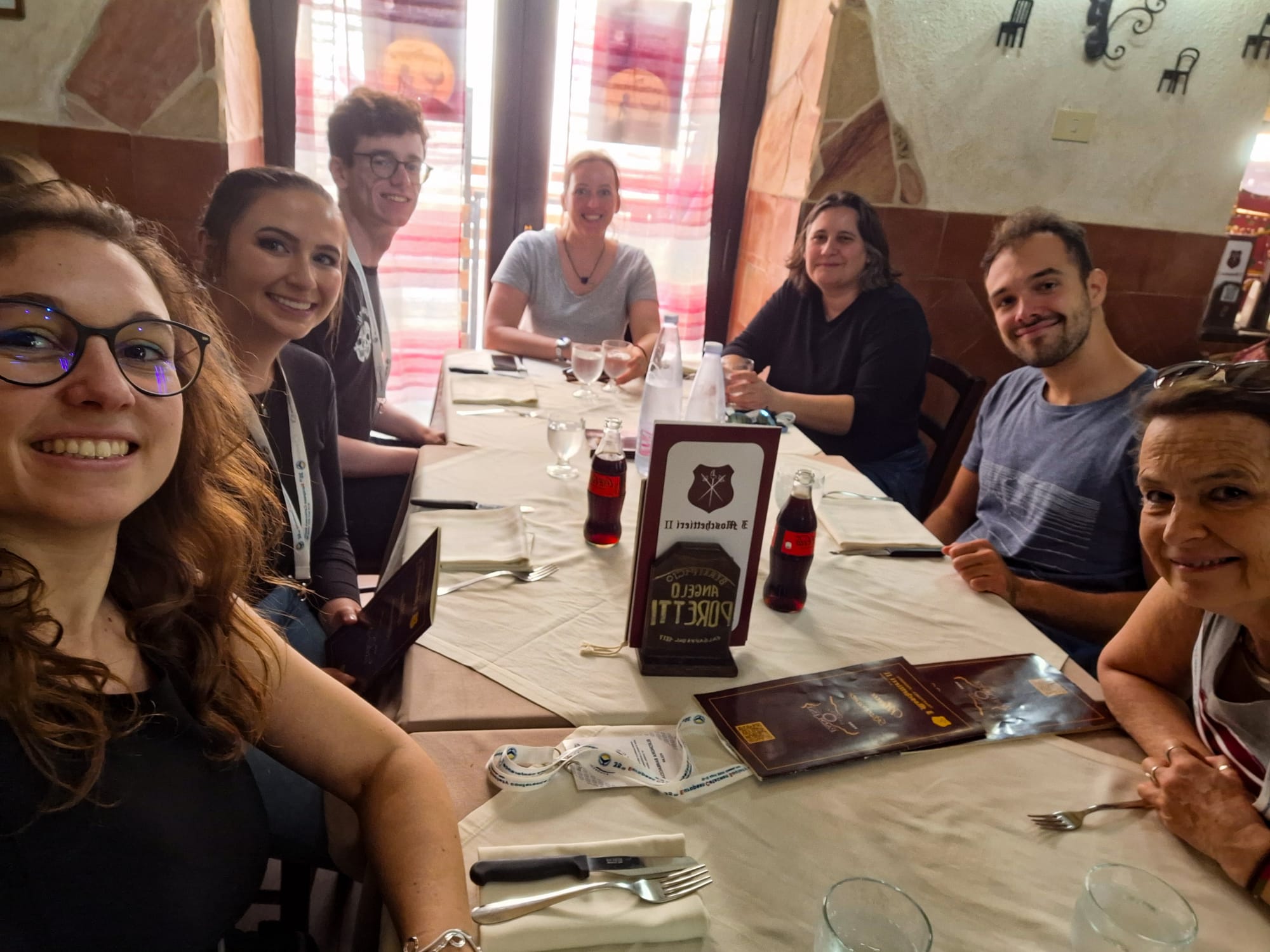
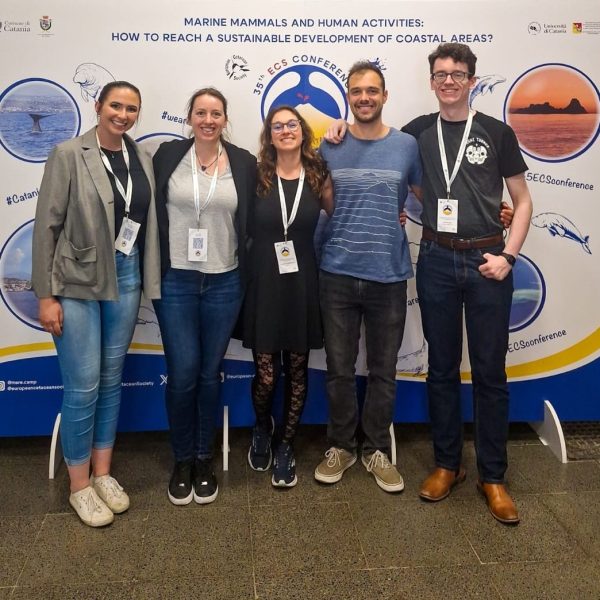
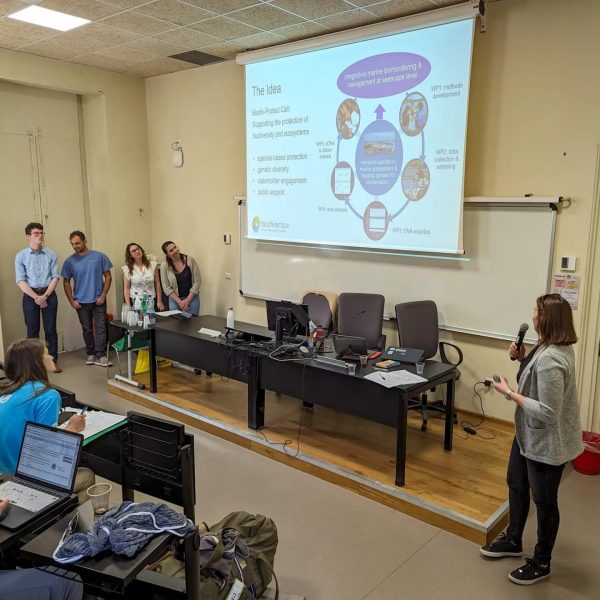
In the two days before the conference, part of the team joined an eDNA workshop led by Elena Valsecchi, Simon J. Goodman and Alessia Rota, presenting the project’s initial steps and goals.
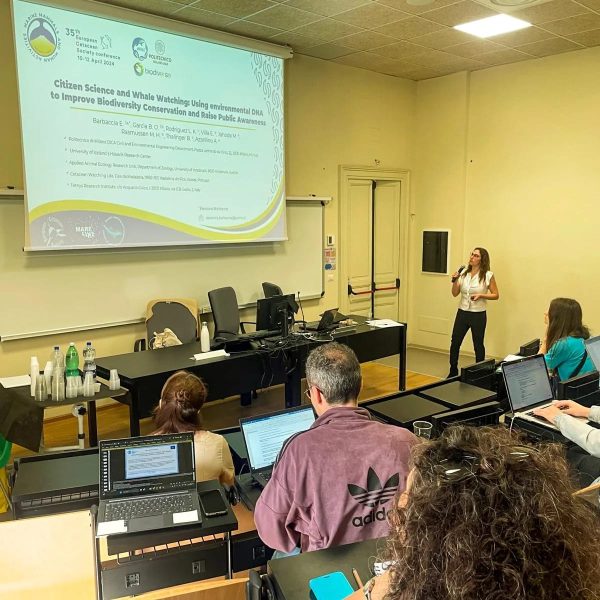




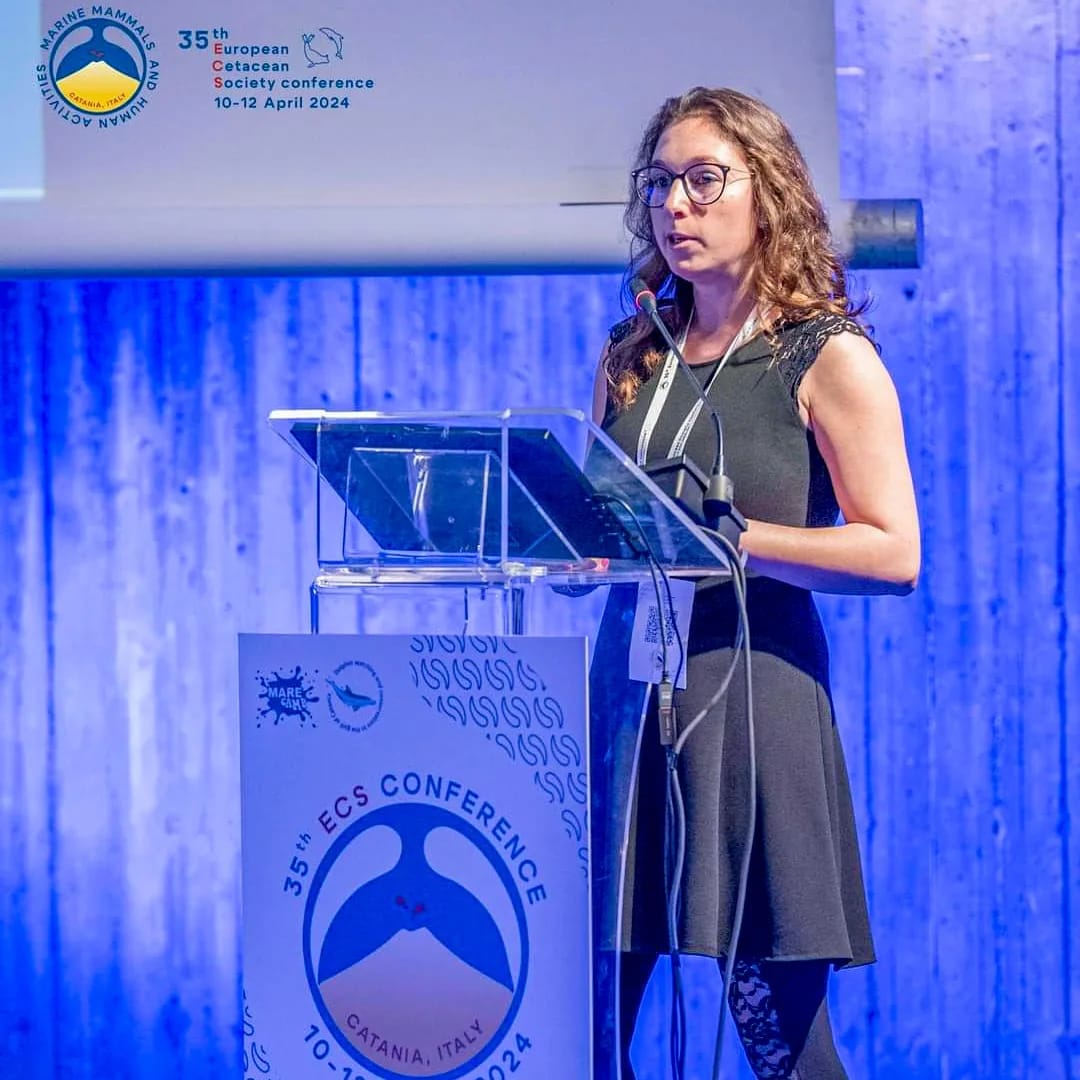
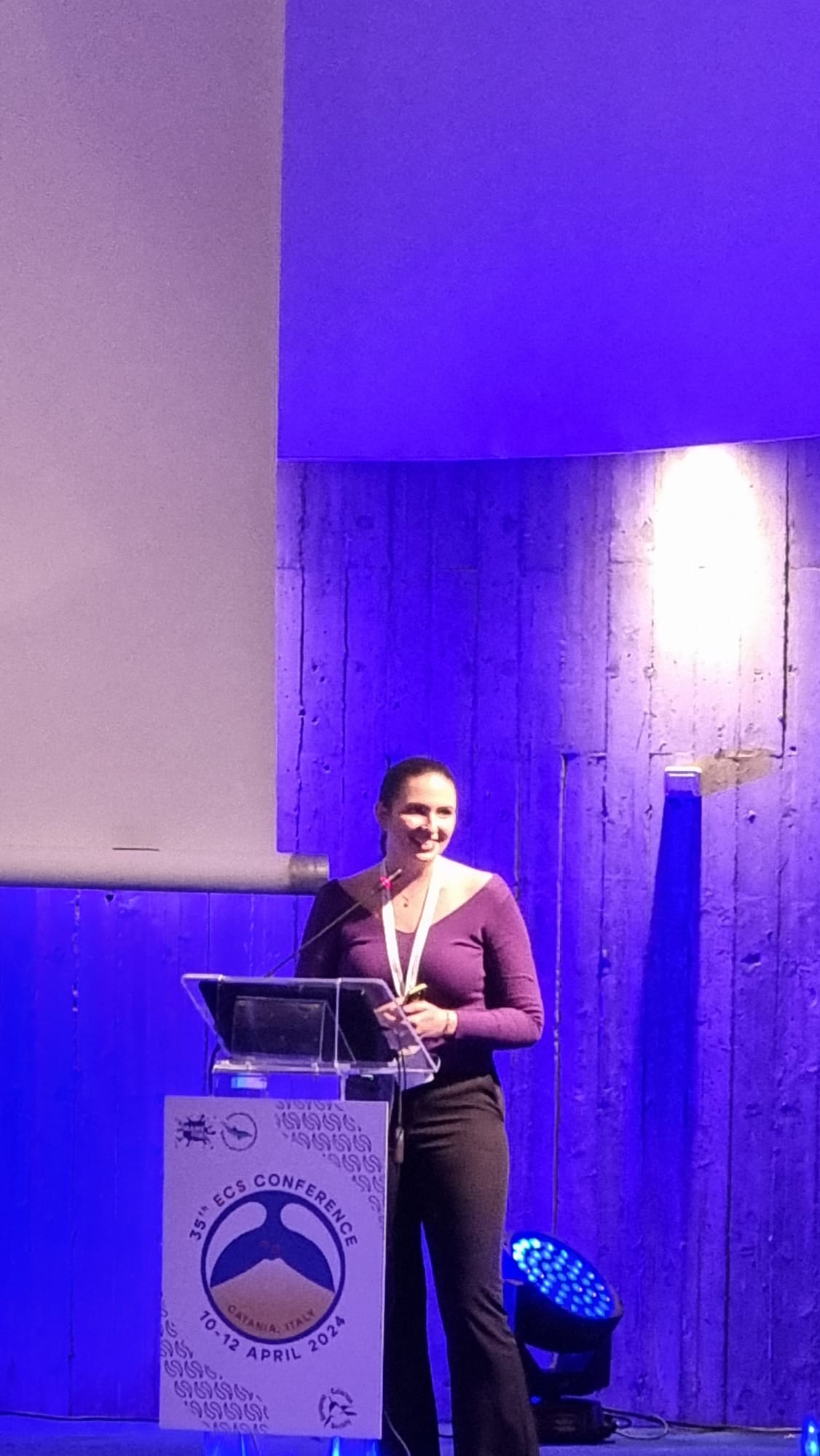
Eleonora Barbaccia, the PhD student at Politecnico di Milano (Italy), presented a talk entitled “Enhancing biodiversity conservation and public awareness through citizen science and whale watching with eDNA monitoring.”
This presentation reported a before-and-after questionnaire study run aboard whale-watching platforms in Italy, Portugal and Iceland.
Multiple Correspondence Analysis explored links between participant traits and awareness, and a Wilcoxon paired test showed a highly significant increase in biodiversity and eDNA knowledge after the onboard activity (P < 0.01), evidencing the educational impact of citizen-science-driven eDNA sampling.
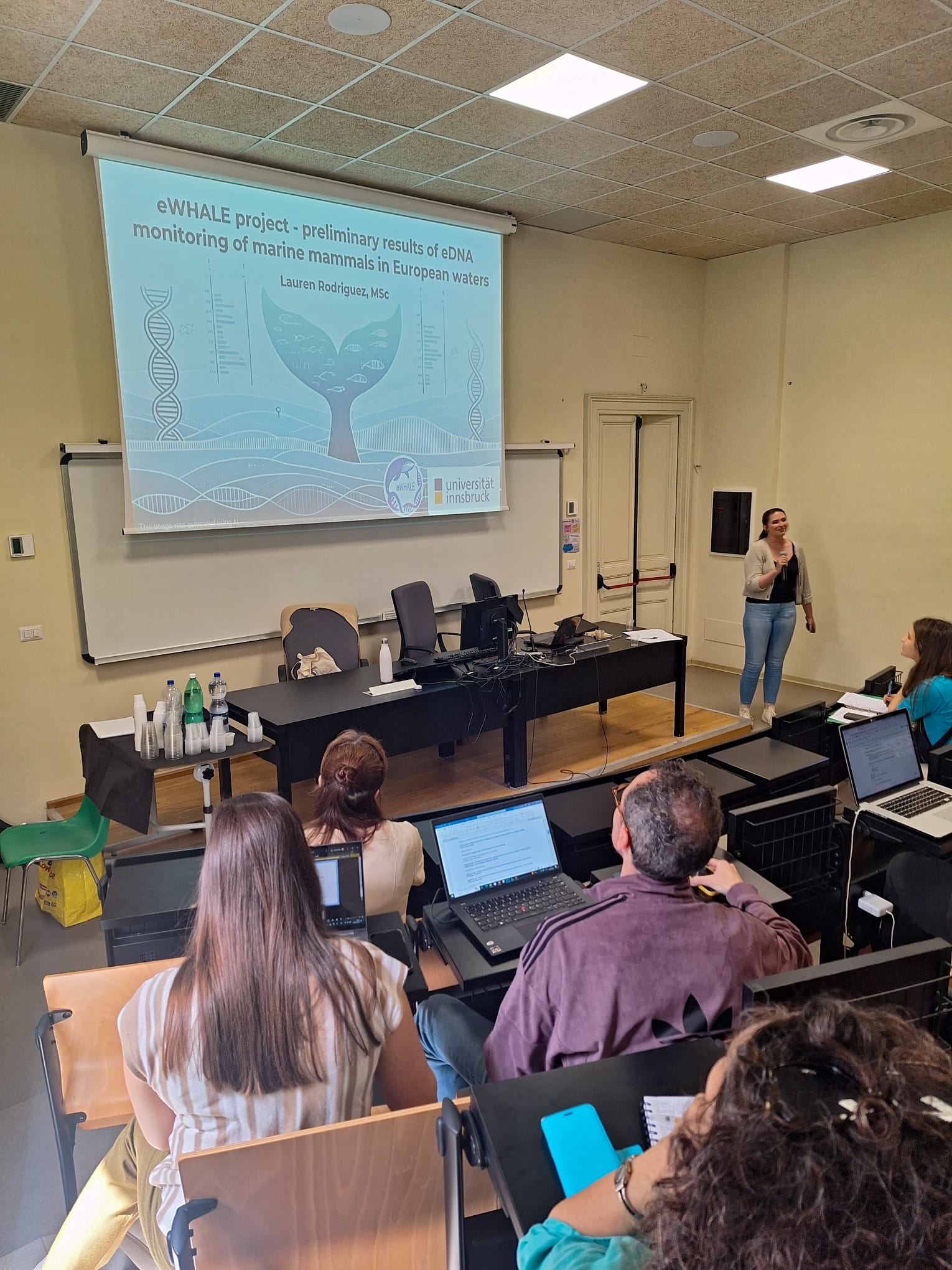
Lauren Rodriguez, the PhD student at University of Innsbruck (Austria), presented the talk “Optimizing environmental DNA field sampling and laboratory protocols across a multinational initiative to detect and quantify the presence of whales in the North-East Atlantic and Mediterranean Sea”.
She outlined how the eWHALE consortium harmonised eDNA sampling approaches across multiple countries by systematically testing key field parameters in 2023, including sampling location (flukeprint vs breach site), timing after whale presence, filter type and filtered water volume. A ring test performed across four international laboratories confirmed the comparability and reliability of their extraction and qPCR workflows. Results showed that higher water volumes increased eDNA yield, that 1–5 minutes after a whale’s presence still allowed detection, and that both flukeprint and breach samples produced similar quantities of cetacean DNA.

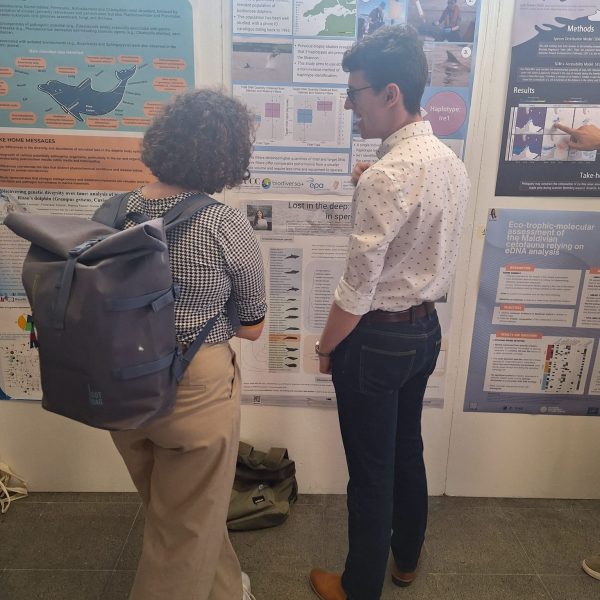
Lorenzo De Bonis, the PhD student at University College Cork (Ireland), presented a poster entitled: "eWHALE: Combining environmental DNA sampling, whale watching and citizen science for stakeholder-driven marine biodiversity protection in the North-East Atlantic and the Mediterranean".
He presented the consortium’s design and first multi-site results: 341 eDNA samples collected with four filter types (Waterra, Smith-Root, Sylphium, Sterivex) across the Azores, the Pelagos Sanctuary, Brittany, Skjálfandi Bay, Irish and Norwegian waters.
Target cetacean and shark DNA has already been detected, with paired biopsies planned to validate individual identification and population genetics.
Metabarcoding and qPCR are being used to profile putative prey, while onboard engagement embeds citizen science in routine tours, building a blueprint for international, participatory marine monitoring.
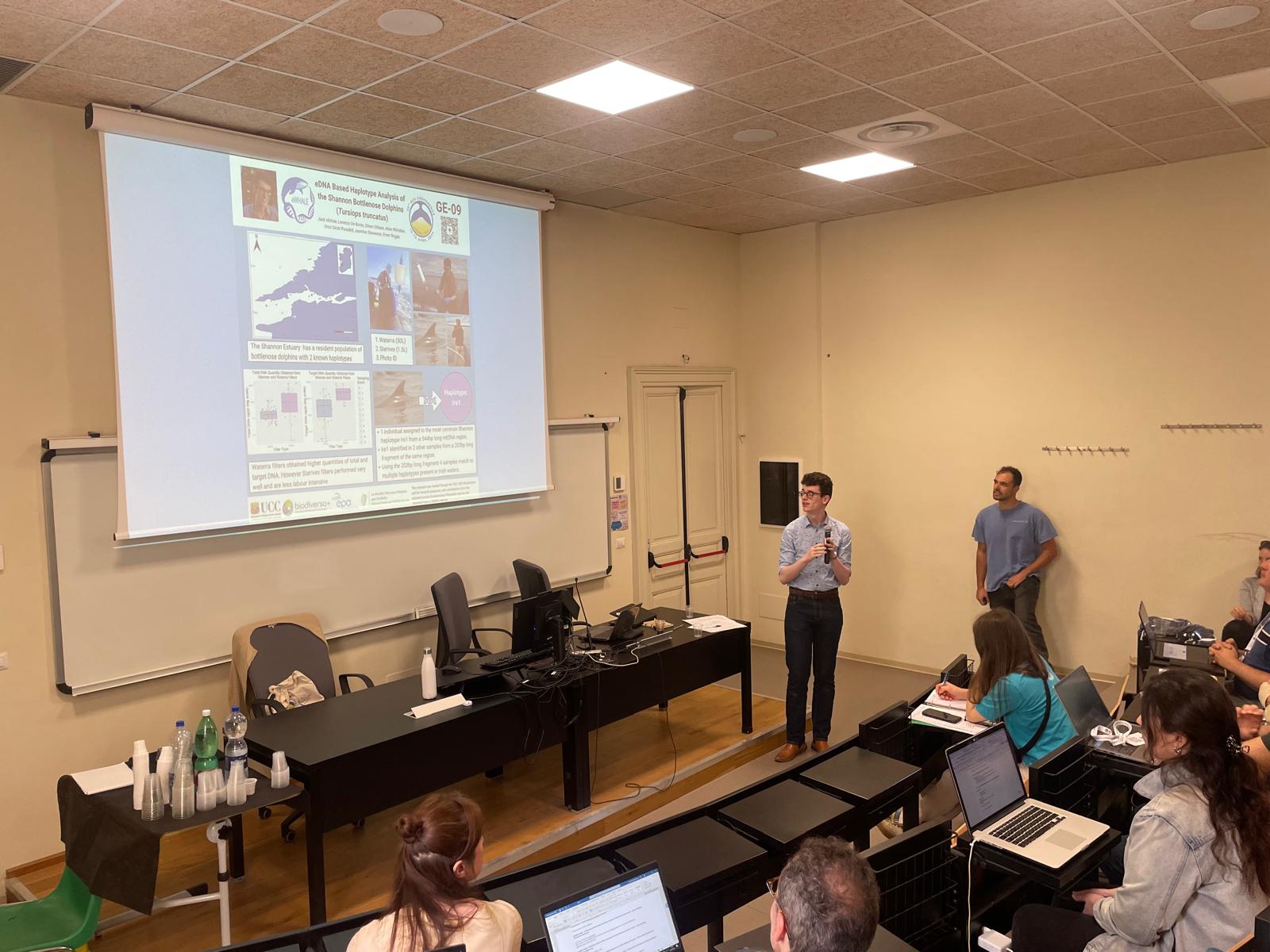
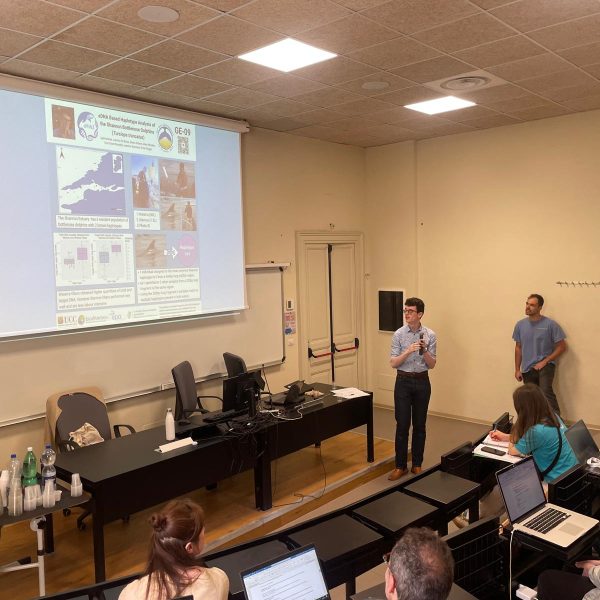
Jack McKee, the master’s student at University College Cork (Ireland), presented the poster eDNA-based haplotype analysis of the Shannon bottlenose dolphins (Tursiops truncatus).
Working in the Shannon Estuary SAC, he tested non-invasive eDNA approaches to characterise haplotype diversity in this resident population, comparing Waterra (50 L) and Sterivex (1.5 L) filters. Waterra yielded higher total and target DNA, while Sterivex achieved comparable results with lower sample volumes and simpler logistics.
Mitochondrial fragments (≈544 bp and 203 bp) confirmed the common Shannon haplotype Ire1 across multiple samples, demonstrating the feasibility of eDNA to support population-level genetics alongside photo-ID and biopsy programmes.

 English